

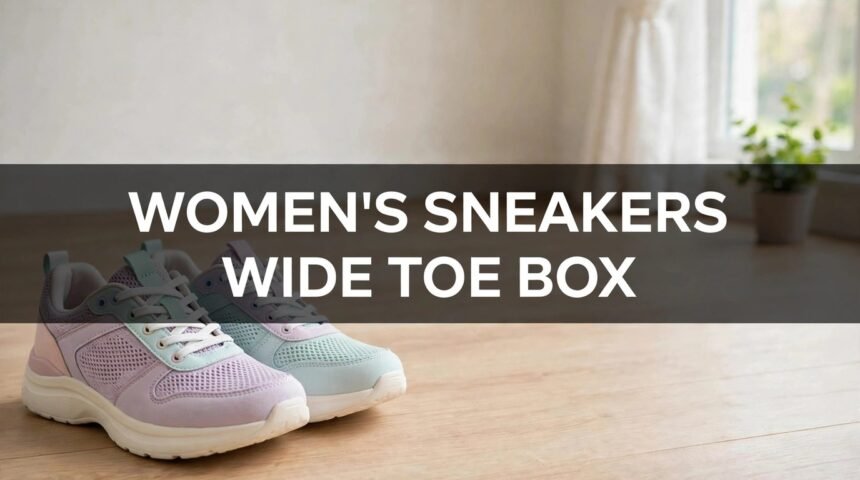
If your toes feel pinched by lunchtime, if your little toe rubs raw on every walk, or if you have simply never owned a pair of sneakers that felt right at the front, the problem is probably not your feet. It is the shape of your shoes. Most women’s sneakers taper toward the front, squeezing all five toes into a point that has very little to do with how a real foot looks. Women’s sneakers with a wide toe box fix exactly that. They give your toes room to spread, bend and work the way nature intended, and for many women the difference is obvious within the first day.
This guide explains what a wide toe box really is, how it differs from a wide width size, who benefits most, which brands are known for roomy forefeet, and how to choose a pair that fits your feet, your budget and your daily life. Whether you walk for exercise, stand all day at work, run a few miles a week, or simply want shoes that stop hurting, you will find a clear answer here.
What Is a Wide Toe Box?
A wide toe box is the front section of a shoe that is shaped like a foot rather than like a fashion silhouette. In a normal sneaker, the toe box narrows sharply toward the big toe side and the little toe gets pushed inward. In a wide toe box sneaker, the front stays broad and squared off, so all five toes can lie flat and spread apart when you stand, walk or push off the ground.
Key takeaway: a wide toe box is about the shape of the front of the shoe, not just about making the whole shoe bigger.
Podiatrists describe this as a foot shaped design. The widest part of the shoe sits at the ends of the toes, where your foot is actually widest, instead of at the ball of the foot. That small change in geometry matters more than it sounds. When your toes can splay, they form a wider base of support for your whole body. Balance improves, pressure spreads more evenly across the forefoot, and the toes can bend and flex naturally with each step instead of being held rigid.
It also helps to understand what a wide toe box is not. It is not a shoe that is simply one size larger. Going up a size in a regular sneaker gives you extra length, but the toe box keeps the same narrow taper, so your toes still get squeezed while your heel starts slipping. A true wide toe box changes the shape, not just the size.
Wide Toe Box vs Wide Width: The Difference That Matters
This is the single most confusing part of shopping for women’s sneakers with a wide toe box, and getting it wrong is the reason many women buy “wide” shoes and still feel pinched.
A wide width shoe, usually labelled D in women’s sizing, or 2E and 4E for extra wide, is wider through the whole shoe. The heel, the midfoot and the forefoot all get broader. A wide toe box shoe, on the other hand, is only wider at the front. The heel and midfoot can stay snug and secure while the toes get room.
Key takeaway: wide width means the whole shoe is broader, while a wide toe box means only the front is roomier.
Here is how to decide which one you need:
- If your whole foot is broad, from heel to toes, look for a wide or extra wide size, ideally in a model that also has a roomy toe box. Brands like New Balance and Brooks are well known for offering genuine D, 2E and 4E widths across many models.
- If your heel and midfoot fit fine in a regular width but your toes feel crushed, you need a wide toe box, not a wide size. Brands like Altra and Topo Athletic build foot shaped lasts into their regular width shoes, so the toe box is roomy without the heel getting sloppy.
- If you have a bunion, the big toe joint needs space to sit straight. Shape matters more than width here, because a wide shoe with a tapered toe box will still press on the bunion.
- If your feet swell during the day, which is common in warm weather, during pregnancy or after long hours standing, a wide toe box plus a stretchy upper gives you the flexibility you need.
Many of the best options combine both. Several popular running and walking models now come in a wide width version with an already roomy toe box, so you can get the best of both worlds.
Why a Wide Toe Box Helps Your Feet
The benefits of women’s sneakers with a wide toe box go beyond simple comfort, though comfort alone is reason enough for most buyers. Here is what changes when your toes finally have room.
Less pressure and fewer blisters
When toes are squeezed together, skin rubs against skin and against the shoe with every step. That friction causes blisters, corns and calluses, especially on the little toe and between the toes. A roomy toe box removes the squeeze, so hot spots and blisters become far less common. Runners often notice this first on longer efforts, when feet swell slightly and a narrow shoe that felt fine at mile one becomes painful by mile five.
Room for bunions and hammertoes
Bunions affect a large share of adults, and women are affected more often than men. Research often cited in footwear guides puts bunions at around 19 percent of the general population. Narrow footwear is widely identified as a major contributing factor, and a wider toe box can reduce pressure on the big toe joint. It will not reverse a bunion, and anyone with a painful bunion should talk to a podiatrist, but a shoe that does not press on the joint usually feels much better day to day. The same logic applies to hammertoes, where a cramped toe box forces the toe into a bent position, and to Morton’s neuroma, a painful nerve condition in the forefoot that often feels worse when the metatarsal bones are squeezed together.
Better balance and stability
Your toes are not decoration. They grip, balance and push. When they can spread, they create a wider base of support, which improves stability on uneven ground and reduces the risk of tripping. Podiatrists quoted in recent footwear guides point out that this makes wide toe box shoes a sensible choice for anyone who feels unsteady, for older walkers, and for people who spend long hours on their feet.
Space for orthotics and swollen feet
A roomy forefoot makes it easier to fit custom orthotic inserts, which often take up space inside a shoe. Many wide toe box models also come with removable insoles, so you can swap in your own insert without the shoe feeling tight. The extra volume also helps when feet swell during the day, which is why nurses, teachers, retail workers and anyone on their feet for a full shift often prefer this style.
A more natural stride
Shoes with a foot shaped toe box let the foot work more like it does barefoot, with the toes spreading on landing and pushing off naturally. Some runners find this improves their comfort on long runs, and some walkers find their stride feels smoother. This is not a medical claim and it does not replace proper training or medical advice, but it is one of the most commonly reported benefits by people who switch.
Who Needs Women’s Sneakers With a Wide Toe Box?
The honest answer is that almost anyone can benefit, but some groups notice the difference far more than others.
Key takeaway: if your toes hurt, go numb, or show pressure marks after wearing shoes, a wide toe box is worth trying regardless of your age or activity level.
Women with bunions, hammertoes or Morton’s neuroma
If you already have a forefoot condition, a wide toe box is one of the simplest changes you can make. It reduces direct pressure on the painful area and gives the toes room to sit in a more natural position. Pair it with a soft, stretchy upper rather than stiff leather for the best result.
Women with naturally wide forefeet
Some women have feet that are narrow at the heel but broad across the toes. Standard women’s sneakers, which are built on a B width last, are often too narrow at the front for this foot shape even when the length is right. If you regularly find that your little toe hangs over the edge of the insole, or your big toe presses against the side of the shoe, your forefoot is wider than the shoe’s last.
Runners and long distance walkers
Feet swell during exercise, sometimes by as much as half a size over a long run. A wide toe box gives that swelling somewhere to go. Runners also report fewer black toenails and less numbness when the toes are not compressed. If you run more than 30 miles a week, or your toes go numb before mile four, fit at the front of the shoe deserves your attention.
People who stand all day
Nurses, teachers, shop assistants, hairdressers and hospitality workers spend eight to twelve hours on their feet. A shoe that pinches at 9 in the morning will be unbearable by 5 in the afternoon. For all day standing, look for a wide toe box combined with good cushioning and a supportive midsole, not just room at the front.
Older women and anyone with swollen feet
Feet change with age. Arches can drop, joints can stiffen, and feet can widen. Research published in the Journal of Foot and Ankle Research in 2013 found that as many as two thirds of older women were wearing shoes too narrow at the toe box, and that this poor fit contributed to forefoot pain and toe deformities. A roomy toe box with an easy on design, such as a slip on or a shoe with a wide opening, can make a real difference.
Beginners trying foot shaped shoes for the first time
If you have never tried a wide toe box, start with a walking or everyday model rather than a specialist running shoe. You will feel the difference immediately, and you can decide whether you want the same shape in a running shoe later.
How to Choose the Right Pair
Buying women’s sneakers with a wide toe box is easier once you know what to check. Follow these steps and you will avoid the most common mistakes.
Step 1: Measure your feet at home
Stand on a piece of paper in the socks you normally wear, trace around each foot, and measure the length and the width at the widest point, across the ball of the foot. Do this in the late afternoon or evening, when feet are at their largest. Measure both feet and use the larger one. Many shoe brands publish size charts with width measurements, and comparing your numbers to the chart is more reliable than guessing.
Step 2: Check the shape, not just the label
A shoe can be labelled wide and still have a tapered toe box. Before you buy, look at the shoe from above. The front should look broad and squared, following the shape of your toes. Better still, take out the insole and stand on it. If your toes spill over the edges of the insole, the shoe is too narrow for you, whatever the label says. This simple insole test is one of the most reliable fit checks there is.
Step 3: Try shoes on later in the day
Feet swell as the day goes on, so a shoe fitted in the morning can feel tight by evening. Shop in the afternoon when you can, wear your usual socks, and walk around the shop for several minutes. Your toes should be able to wiggle freely, and there should be about a thumb’s width of space between your longest toe and the end of the shoe.
Step 4: Decide on drop and cushioning
Drop is the height difference between the heel and the forefoot. Traditional running shoes often have a drop of around 8 to 12 mm. Some foot shaped brands, most famously Altra, use a zero drop platform where heel and forefoot are level. Zero drop feels different and your calves and Achilles tendons need time to adapt, so if you have heel or Achilles pain, a conventional drop of 5 to 10 mm is usually the safer starting point. For cushioning, daily walking and standing suit a soft, thick midsole, while gym work and strength training suit a firmer, flatter shoe.
Step 5: Think about your main use
One pair rarely does everything perfectly. A soft, cushioned walking shoe is ideal for all day wear but too soft for heavy lifting. A stable running shoe works for daily miles but may look too sporty for the office. Decide what you will do in the shoes most often and choose for that, rather than buying a compromise that does nothing well.
Best Brands and Models Known for Wide Toe Boxes
No single brand suits every foot, but a handful of names come up again and again in podiatrist recommendations and 2026 roundups of wide toe box shoes for women. These are the ones worth shortlisting first. Model names and versions change often, so check the current version before you buy, and treat prices as approximate, since they vary by retailer and season.
Key takeaway: Altra and Topo Athletic build wide toe boxes into their standard shape, while New Balance, Brooks, Hoka and On offer wide width versions of popular cushioned models.
Altra: the foot shaped specialist
Altra is the brand most associated with wide toe boxes, because it builds a foot shaped last into every shoe it makes rather than offering wide sizes as an afterthought. The Altra Torin is its best known everyday road shoe, praised for a genuinely roomy forefoot, and the Altra Escalante is a lighter, more flexible option for walking and daily wear. The Altra Provision adds stability for walkers who need more support. All Altra shoes are zero drop, which suits many people but needs a gradual transition, so start with short walks and build up. Altra models typically sit in the mid to premium price range.
Topo Athletic: roomy with a normal drop
Topo Athletic is the closest rival to Altra for anatomical fit, but with a conventional heel to toe drop, which makes it an easier switch for most people. The Topo Phantom is a well cushioned daily trainer with a wide forefoot, and the Topo Atmos is a lighter option in the same foot shaped style. Topo does not usually offer separate wide sizes, because the standard last is already roomy, which is worth knowing if width labels have failed you before.
New Balance: the widest range of widths
New Balance is the safest choice if your whole foot is broad, not just your toes, because it offers narrow through extra wide fittings across many models. The Fresh Foam X 1080 is a plush, cushioned daily shoe available in wide and extra wide women’s sizes, and the Fresh Foam X 880 is a slightly firmer, versatile alternative in the same widths. For walkers who want maximum cushioning, the 1080 is the usual pick. New Balance prices for these models generally sit in the mid premium range.
Brooks: reliable support in wide fits
Brooks is a favourite among walkers and runners who need structure as well as room. The Brooks Ghost is its best selling neutral daily trainer, available in wide and extra wide women’s sizes, and the Brooks Adrenaline GTS is the stability version for people whose feet roll inward. Both give genuine forefoot room in their wide versions and are known for a predictable, comfortable ride. The Ghost Max offers even more forefoot room with a rocker sole that helps if your big toe joint is stiff.
Hoka: maximum cushioning for long days
Hoka shoes are known for thick, soft midsoles and a smooth ride. The Hoka Clifton is a popular everyday walking and running shoe available in wide, and the Hoka Bondi is the maximum cushion option for long days on your feet or long runs. Hoka models tend to be light for their cushioning, but they sit at the premium end of the price range.
On: a modern wide option
The On Cloudrunner, in its wide version, has become a popular all rounder for wide feet, with a forefoot that genuinely feels wide rather than just labelled wide. It suits daily wear and easy running, and its clean design works well as a casual sneaker too.
FitVille and Xero: specialists worth knowing
FitVille is a specialist brand focused on wide fit and orthopedic comfort shoes, with slip on walking models like the Cloud Wanderer that suit all day wear and swollen feet. Xero Shoes takes the opposite approach, with minimalist, flexible shoes like the Dillon sneaker that have a wide toe box and very little cushioning, aimed at people who want a barefoot feel for light activity and everyday wear.
A quick comparison
| Brand | Best for | Width approach |
|---|---|---|
| Altra | Natural toe splay, everyday running | Foot shaped last in every shoe, zero drop |
| Topo Athletic | Roomy fit with normal drop | Anatomical last, standard widths |
| New Balance | Broad feet, plush cushioning | Wide and extra wide sizes, many models |
| Brooks | Support, stability, daily miles | Wide and extra wide sizes |
| Hoka | Maximum cushion, long days | Wide versions of popular models |
| On | Modern all rounder, daily wear | Wide version with roomy forefoot |
| FitVille | Wide fit comfort, easy on | Specialist wide fit designs |
| Xero | Minimalist, barefoot feel | Wide toe box, flexible sole |
Fit Tips That Make the Difference
Getting the right model is only half the job. These practical fit tips will help you get the most out of any wide toe box sneaker.
Key takeaway: fit your shoes to your feet in the afternoon, with wiggle room at the toes and a secure heel, and break them in gradually.
- Leave toe wiggle room. You should be able to spread and lift your toes inside the shoe without hitting the sides or the top. If you cannot wiggle, the toe box is still too narrow or too shallow.
- Lock the heel, free the toes. The heel should feel secure with no slipping, while the forefoot stays roomy. If the heel slips in a wide toe box shoe, try a different lacing technique, such as a heel lock lace, before giving up on the model.
- Use the right socks. Thin running socks and thick hiking socks change the fit noticeably. Always try shoes on in the socks you will actually wear, and consider moisture wicking socks for long walks and runs.
- Check the depth, not just the width. Women with hammertoes or a high instep need a deep toe box as well as a wide one, so the top of the shoe does not press down on the toes. A shoe can be wide but shallow, and that still hurts.
- Break them in slowly. Even comfortable shoes need a short adjustment period, especially if you are switching to zero drop. Wear new shoes for short walks first, then build up the distance over a week or two. If pain appears and does not settle, stop and reassess the fit rather than pushing through.
- Replace worn shoes on time. Cushioning compresses and support fades with use. Daily walking shoes typically last around 300 to 500 miles depending on the model and your weight, and running shoes are usually replaced in a similar range. If your feet start aching in old shoes that used to feel fine, worn out cushioning is a likely cause.
- Consider your orthotics. If you wear custom inserts, remove the shoe’s own insole before fitting, and bring the inserts with you when you try shoes on. Many wide toe box models have removable insoles designed for exactly this.
Choosing by Budget and Experience
You do not need to spend a fortune to get a comfortable wide toe box, but it helps to know what each price level buys.
Budget friendly: under roughly 100 dollars or pounds
At this level, look for previous versions of popular models on sale, or for value focused brands. Last season’s Brooks Ghost or New Balance 880 often drops in price when the new version launches, and the fit is usually very similar. FitVille models also tend to sit at the lower end of the price range. Avoid unknown brands that claim a wide toe box without reviews or a clear returns policy.
Mid range: roughly 100 to 160
This is where most of the best options live. Current versions of the Brooks Ghost, New Balance 880 and 1080, Hoka Clifton, Altra Torin and Topo Phantom generally fall in this band. You get better cushioning, more durable materials and proper wide width options. For most buyers, this is the sweet spot.
Premium: roughly 160 and above
Premium models like the Hoka Bondi and some Altra and Topo options cost more, but offer maximum cushioning or specialist features. Choose this level if you run long distances, stand all day, or have a foot condition that needs the extra comfort. For casual wear alone, premium cushioning is a luxury rather than a necessity.
Beginners
If this is your first wide toe box shoe, start with a mid range walking or daily trainer from New Balance or Brooks in a wide width, or a Topo model if you like the foot shaped idea but want a normal drop. These are the easiest transitions and the most forgiving fits.
Experienced runners and walkers
If you already know your foot shape and your needs, you can be more specific. Choose Altra for maximum toe splay, Hoka for maximum cushioning, or a stability model like the Brooks Adrenaline GTS if you overpronate. Experienced buyers often keep two pairs in rotation, one cushioned pair for long days and one lighter pair for shorter efforts, which also extends the life of both.
Common Mistakes to Avoid
- Buying a wide size when you need a wide toe box. As explained above, these solve different problems. Check the shape of the forefoot, not just the width label.
- Buying a size up instead of a wider shape. Extra length makes the heel slip and the shoe feel clumsy, while the toes stay squeezed.
- Choosing by looks alone. A sleek, tapered sneaker may look smart, but if it pinches, you will stop wearing it. Fit first, style second.
- Ignoring the break in period for zero drop shoes. Switching to zero drop too fast can strain calves and Achilles tendons. Transition over several weeks.
- Forgetting that feet swell. A shoe fitted tightly in the morning can become painful by afternoon. Always leave a little extra room.
- Keeping shoes too long. Worn out cushioning and a collapsed toe box undo all the benefits. Check the tread and the midsole regularly.
- Skipping the insole test. Standing on the removed insole takes ten seconds and tells you more about fit than any size chart.
Frequently Asked Questions
Are wide toe box sneakers only for women with foot problems?
No. Anyone can wear them, and many women choose them simply because they are more comfortable. They are especially helpful for bunions, hammertoes, Morton’s neuroma, swollen feet and wide forefeet, but you do not need a diagnosis to enjoy the extra room.
What is the difference between wide toe box and wide width?
A wide toe box is wider only at the front of the shoe, where the toes sit. A wide width shoe is wider through the whole shoe, including the heel and midfoot. If only your toes feel pinched, you need a wide toe box. If your whole foot feels tight, you need a wide width, ideally in a model that also has a roomy toe box.
Do wide toe box sneakers look bulky or unfashionable?
Not any more. Many current models look like ordinary modern sneakers, and brands like On, Hoka and New Balance make wide toe box options in clean, everyday colours. Some foot shaped models do look broader at the front, which is simply the shape of a healthy foot, but most people will not notice unless they look closely.
Can I run in wide toe box sneakers?
Yes. Many of the best models, including the Altra Torin, Topo Phantom, Brooks Ghost and New Balance 1080, are designed for running and come in wide toe box or wide width versions. Choose a model built for your running style and distance, and break in zero drop shoes gradually.
Should I size up in wide toe box sneakers?
Usually not. A wide toe box shoe is designed to fit your normal length with extra room at the front. Start with your usual size, check that your toes can wiggle and that there is a thumb’s width of space at the end, and only size up if the length is genuinely short. If you are between sizes, try both and walk in each for several minutes.
Are wide toe box shoes good for plantar fasciitis?
They can help, because they let the foot function more naturally and reduce compensatory strain, but they are not a treatment on their own. Plantar fasciitis usually needs a combination of supportive footwear, stretching, and professional advice. Look for a wide toe box model with good arch support and a removable insole so you can use an orthotic if your podiatrist recommends one.
How do I know if a shoe really has a wide toe box?
Look at the shoe from above: the front should be broad and squared, not pointed. Take out the insole and stand on it: if your toes spill over the edges, the shoe is too narrow. Read reviews that mention toe room specifically, and prefer brands known for foot shaped lasts, such as Altra and Topo Athletic, when in doubt.
Can I wear wide toe box sneakers with orthotics?
Yes, and many models are designed for it. Choose a shoe with a removable insole and a roomy forefoot, fit the shoe with your orthotic inside, and check that the toe box still has wiggle room once the insert is in place.
Conclusion
Women’s sneakers with a wide toe box solve a problem that millions of women live with quietly: shoes that look fine on the shelf but pinch, rub and ache by the end of the day. The fix is simple once you understand it. You need a shoe shaped like your foot, broad at the toes and secure at the heel, not a bigger size of the same narrow shape.
Start by measuring your feet and checking the shape of the shoes you already own. Shortlist one or two brands from this guide that match your needs, whether that is Altra or Topo for a naturally foot shaped fit, New Balance or Brooks for genuine wide widths, or Hoka for maximum cushioning. Try them on in the afternoon, use the insole test, and give your feet a few days to adjust, especially if you switch to zero drop.
Your feet carry you everywhere. Giving your toes room to spread is one of the smallest changes you can make and one of the most noticeable. Once you have walked a full day in a pair that actually fits, going back to a narrow toe box will feel like a step backwards.
Read Also: Timex Men’s X Seconde/Seconde Stainless Steel Bracelet Watch