

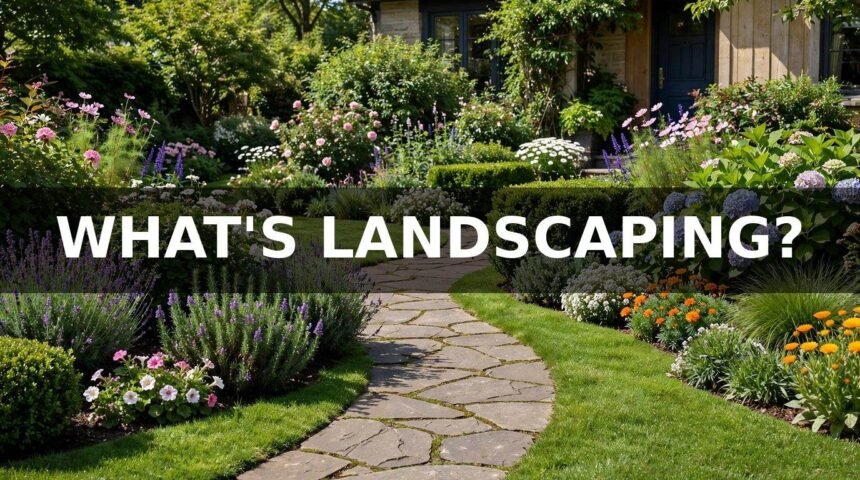
What’s Landscaping?
What’s landscaping? In simple terms, landscaping is the work of planning, shaping and looking after the outdoor space around a home, a business or any other property. It is about making that space look good, work well and feel pleasant to spend time in. A landscaped garden is not just a patch of grass with a few plants thrown in. It is a space that has been thought about, where the lawn, the plants, the paths, the seating and even the lighting all fit together.
Most people first think of landscaping as gardening, and gardening is certainly part of it. But landscaping goes further. Gardening is often about caring for plants. Landscaping includes the plants, but it also includes the layout of the whole area, the surfaces you walk on, the walls that hold soil back, the places where water drains away, and the spots where you sit on a warm evening. It brings together the natural parts of a garden, like grass, trees and flowers, with the built parts, like patios, steps and fences.
A good way to think about it is this: if a house is the inside where you live, landscaping is the outside where you live too. It is the front garden that greets visitors, the back garden where children play, the courtyard outside a cafe, and the green space around an office. When it is done well, you might not even notice all the separate decisions that went into it. You just feel that the place is calm, tidy and inviting.
Landscaping matters for practical reasons as well as for looks. A well-planned garden can give you shade in summer, shelter from wind, privacy from neighbours and a safe, level place to walk. It can help rainwater drain away from a house instead of pooling near the walls. It can make a small garden feel bigger, and a large garden feel less empty. And for many homeowners, it adds real value to a property, because buyers notice a cared-for outside space straight away.
What Do Landscapers Actually Do?
A landscaper is the person, or the team, who plans and carries out this work. Some landscapers focus mainly on design, drawing up a plan for how a garden should look. Others focus on building and planting, turning that plan into a real garden. Many do both, and many also come back regularly to maintain the garden once it is finished.
The work usually starts with looking at the space as it is now. A landscaper will check the size and shape of the garden, how much sun different parts get, what the soil is like, where water collects after rain, and what is already there that is worth keeping. A mature tree, a solid wall or a well-placed path might stay. A broken fence, a patch of weeds or a slope that erodes every winter might need to change.
From there, the landscaper talks with the owner about how the space will be used. A family with young children needs something different from a couple who want a quiet reading corner, and both need something different from a restaurant that wants outdoor tables. The landscaper asks about style as well. Some people like a neat, formal garden with straight lines and trimmed hedges. Others prefer a loose, natural look with wildflowers and curved beds. Some want low maintenance above all else. Others are happy to spend weekends in the garden.
Once the plan is agreed, the practical work begins. That can include clearing old plants and rubble, levelling or reshaping the ground, improving the soil, laying turf or sowing grass seed, planting trees, shrubs and flowers, building patios and paths, putting up fences and pergolas, and installing lighting or watering systems. After the garden is built, maintenance keeps it in shape: mowing, pruning, weeding, feeding plants, checking irrigation and tidying beds through the seasons.
In short, landscapers do far more than mow lawns. They design outdoor spaces, build them, plant them and keep them healthy. The best ones think about how a garden will look not just on the day it is finished, but in a year, in five years, and when the trees have grown.
Softscaping vs Hardscaping
One of the most useful ideas in landscaping is the difference between softscaping and hardscaping. Almost every garden uses both, and understanding the balance helps you make better choices.
Softscaping is the living, growing part of a garden. It includes grass, plants, flowers, shrubs, trees, soil and mulch. These are the parts that change with the seasons, grow over time and need regular care. Softscaping gives a garden its colour, scent, shade and softness. A lawn feels different underfoot from paving. A flowering shrub smells different from a stone wall. Without softscaping, a garden would feel hard and bare.
Hardscaping is the built, non-living part. It includes patios, paths, driveways, decking, retaining walls, steps, fences, pergolas, water features made from stone or concrete, and outdoor lighting fixtures. These are the parts that give a garden its structure. They define where you walk, where you sit, and where one area ends and another begins. Hardscaping usually lasts a long time with little care, but it costs more to install and is harder to change later.
The two work together. A patio is more inviting with plants around its edges. A lawn looks better with a clear path across it, so people do not wear a track through the grass. A retaining wall can hold back a slope, and the plants above it soften its hard edge. A good landscape design finds the right mix for the space and the people who use it.
Softscaping vs Hardscaping Compared
| Feature | Softscaping | Hardscaping |
|---|---|---|
| What it includes | Grass, plants, trees, shrubs, flowers, soil, mulch | Patios, paths, walls, decking, fences, steps, lighting |
| Main role | Colour, shade, scent, softness and life | Structure, access, seating and long-term shape |
| Changes over time | Grows, flowers, sheds leaves and changes with seasons | Stays mostly the same, weathers slowly |
| Maintenance | Regular watering, mowing, pruning and feeding | Occasional cleaning and small repairs |
| Cost pattern | Usually lower to install, ongoing care costs | Usually higher to install, lower ongoing costs |
| Best for | Making a space feel natural and welcoming | Making a space usable in all weather |
If you are planning a garden, start by deciding how much hardscaping you really need. A seating area, a path to the back door and a way to deal with a slope are common starting points. Then use softscaping to fill in the rest, soften the edges and bring the space to life. Too much paving can make a garden feel hot and stark. Too little structure can make it feel messy and hard to use.
Types of Landscaping
Landscaping is not one single style. It changes depending on where the space is, who uses it and what the climate allows. Here are the main types you are most likely to come across.
Residential Landscaping
Residential landscaping is the work done around homes. It covers front gardens, back gardens, side yards and courtyards. The goal is usually a mix of beauty, privacy and everyday use. A front garden might be designed to look welcoming from the street, with a clear path to the door and plants that frame the house. A back garden might have a lawn for play, a patio for meals outside, a shady tree and a quiet corner for relaxing.
Because homes vary so much, residential landscaping is very personal. A small city garden needs clever use of space, perhaps with raised beds, climbing plants and a compact seating area. A larger suburban garden has room for separate zones: a play area, a vegetable patch, a flower border and a place to sit in the evening sun. The best residential designs fit the household, not just the plot.
Commercial Landscaping
Commercial landscaping covers the outdoor areas of businesses, offices, shops, hotels, schools, hospitals and public buildings. Here the goals are different. The space needs to look professional, be safe for many people to use, and stay tidy with regular maintenance. A hotel entrance with healthy plants and clear paths makes a good first impression. An office courtyard with seating and shade gives staff a place to take a break. A shopping centre with well-kept planting feels more pleasant to visit.
Commercial work often involves larger areas, stricter safety rules and a maintenance contract, so the planting is kept in shape all year round. Plant choices tend to favour tough, reliable species that look good without constant attention.
Garden Design
Garden design is the planning side of landscaping. A garden designer looks at the whole space and draws a plan that shows where everything will go: the lawn, the beds, the trees, the patio, the paths and the lighting. The plan also considers sun, shade, wind, soil and drainage, and how the garden will look in each season.
You do not always need a formal drawn plan for a small garden, but for a larger project, or a garden with slopes, poor drainage or a tricky shape, a design saves time and money. It helps you see problems before you start digging, and it helps you phase the work if you cannot do everything at once.
Lawn Care and Turfing
Lawn care is a type of landscaping in its own right, and for many people it is the part they notice most. A healthy lawn needs the right grass for the climate and the amount of use it gets, good soil underneath, regular mowing at the right height, watering in dry spells, feeding, and dealing with weeds and bare patches.
Some gardens start with turf, which gives an instant lawn, while others start from seed, which is cheaper but takes longer to establish. Either way, the lawn needs care in the first weeks and months. Mowing too short, watering too little or walking on new turf too soon are common mistakes that set a lawn back.
Xeriscaping
Xeriscaping is landscaping designed to use very little water. It is common in dry and hot regions, but the ideas are useful anywhere water is scarce or expensive. Xeriscaping uses drought-tolerant plants, gravel and mulch instead of large lawns, and groups plants by how much water they need so that none is wasted.
A xeriscaped garden can still be beautiful. It often uses native plants, ornamental grasses, succulents, stone and gravel in a way that suits the local landscape. It needs less mowing, less watering and often less maintenance overall. If you live somewhere with hot summers or water restrictions, it is worth considering.
Other Styles Worth Knowing
Beyond these main types, you will hear names for particular styles. A cottage garden is loose and full of flowers. A formal garden uses symmetry, straight lines and clipped hedges. A modern garden uses clean lines, simple planting and materials like concrete, steel and timber. A wildlife garden is planted to attract birds, bees and butterflies, with native plants, a pond or a log pile. A kitchen garden focuses on herbs, vegetables and fruit. None of these styles is better than the rest. The right one is the one that suits your space, your climate and how you want to use the garden.
The Landscaping Process Step by Step
A landscaping project usually follows a clear sequence. Knowing the steps helps you understand what will happen, how long it might take, and where decisions need to be made.
1. Consultation and Site Assessment
Everything starts with a conversation and a look at the site. The landscaper visits the property, measures the space, notes sun and shade, checks the soil and drainage, and looks at what is already there. The owner explains how the space is used now, what is not working, and what they hope for. This is the time to talk honestly about budget, maintenance and style. A good landscaper will also point out limits, like a shady corner where grass will struggle, or a slope that needs a retaining wall.
2. Design and Planning
Next comes the design. For a small job, this might be a sketch and a plant list. For a larger project, it might be a detailed drawing with levels, materials and planting plans. The design shows where the lawn, beds, paths, patio and features will go, and what materials and plants will be used. This is also the stage to check any practical issues, like access for machinery, where soil and waste will go, and whether any work needs permission.
Take time at this stage. Changing a line on a drawing is cheap. Moving a patio after it has been built is not. Ask to see examples of materials, check the size of plants when they are fully grown, and make sure the plan includes somewhere to store bins, bikes or garden tools if you need it.
3. Site Preparation
Before planting or building, the site needs to be prepared. Old plants, weeds, rubble and broken paving are cleared. The ground may be levelled or reshaped. Poor soil may be improved with compost or topsoil. Drainage may be added where water pools. If hardscaping is planned, the ground is dug and prepared for foundations, and any underground pipes or cables are marked and avoided.
This stage can look messy, and it is often the least glamorous part of the job. It is also one of the most important. A patio laid on poorly prepared ground will sink. Plants put into poor soil will struggle. Good preparation saves problems later.
4. Installation: Hardscaping First
Hardscaping usually comes before planting. Patios, paths, walls, steps and decking are built first, because they involve digging, heavy materials and machinery that would damage new plants. Irrigation pipes and lighting cables are also laid at this stage, before the ground is finished.
Once the structure is in place, the soil is finished and levelled, and the softscaping begins. Turf is laid or seed is sown, trees and shrubs are planted, and flower beds are filled. Larger plants and trees go in first, then smaller shrubs, then ground cover and flowers. Mulch is often added to beds to hold moisture in the soil and keep weeds down.
5. Finishing Touches
The final touches make a garden feel complete. This can include edging along lawns and beds, gravel or bark on paths, outdoor lighting, garden furniture, pots by the door, and a first tidy-up of the whole site. The landscaper should walk the garden with you, explain what has been planted, and show you how to care for it in the first weeks.
6. Maintenance and Aftercare
A garden is not finished on the day it is built. New plants need watering until their roots establish. New turf needs care until it knits together. Over the first year, the garden will settle, plants will grow, and some things may need adjusting. Regular maintenance keeps it looking as intended: mowing, pruning, weeding, feeding, checking irrigation and replacing any plants that do not take.
Many landscapers offer a maintenance visit after a few weeks or months, and many homeowners arrange a regular schedule after that. Even if you plan to do the maintenance yourself, ask for a simple care sheet for the plants in your garden, so you know when to prune, feed and water each one.
Common Landscaping Features
Most landscaped gardens use a mix of features. You do not need all of them. The trick is to choose the ones that fit your space and how you use it.
Patios and decking give you a firm, level place to sit, eat and entertain outside. A patio is usually made from stone, brick or concrete slabs. Decking is made from timber or composite boards and works well on a slope or where you want a warmer feel underfoot. Both need a clear, level base and good drainage so water does not pool.
Paths and walkways connect the parts of a garden. A path from the gate to the front door, a stepping-stone route to a shed, or a walk through flower beds all make a garden easier to use and keep feet off wet grass. Paths can be made from slabs, gravel, brick or timber, and they should be wide enough for two people to pass comfortably where they are used often.
Retaining walls hold back soil on a slope and create level terraces. They can be built from stone, brick, concrete blocks or timber. A low wall can also double as seating around a patio. On a steep garden, terracing with two low walls is often safer and more usable than one tall wall.
Fences, hedges and screens give privacy and shelter. A fence gives instant privacy. A hedge takes longer to grow but softens the boundary and supports wildlife. Trellis with climbing plants is a good middle option, giving privacy without a solid wall.
Lighting extends the use of a garden into the evening and makes paths and steps safer after dark. Low lights along a path, a light over a seating area, and a soft uplight on a tree can change how a garden feels at night. Solar lights are simple to install, while wired lights are brighter and more reliable.
Irrigation and watering systems help plants in dry weather. A simple soaker hose or drip line can water beds efficiently, using less water than a sprinkler. A timed system can be useful if you travel or have a large garden. Even a well-placed water butt, collecting rain from a roof, is a practical addition.
Plants, trees and shrubs are the heart of softscaping. Trees give shade, structure and height. Shrubs fill beds and give year-round shape. Perennials come back each year. Annuals give a burst of colour for one season. Grasses add movement. The best planting mixes plants that flower at different times, so the garden has interest through the year.
Water features, from a small bird bath to a pond or a fountain, add sound and movement. A pond needs thought about safety, especially with children, and about maintenance. A simple bowl of water for birds is a low-effort way to add life to a garden.
Outdoor living features are increasingly common: a pergola for shade, a fire pit or outdoor heater, a built-in bench, a vegetable bed, a compost area, or a play area for children. These make a garden a place to spend time, not just a place to look at.
How Much Does Landscaping Cost?
Landscaping costs vary so much that a single figure would be misleading. The cost depends on the size of the garden, the materials chosen, how much hardscaping is involved, the plants selected, access to the site, and where you live. Labour rates, material prices and even the cost of removing waste differ by region.
In general terms, softscaping alone — new turf, planting beds, mulch and a few shrubs — is usually the lower-cost end of landscaping. Hardscaping — patios, walls, decking, paths and drainage — usually costs more, because it involves more materials, more labour and more preparation. A small tidy-up with fresh planting and a new lawn is a different job from a full garden redesign with terracing, a large patio and lighting.
If you are budgeting, it helps to think in phases. You might do the hardscaping and main structure first, then add planting over time. You might do one area this year and another next year. Ask landscapers for a clear, itemised quote that separates labour, materials, plants and waste removal, so you can see where the money goes and compare quotes fairly. Be wary of a quote that is far lower than others without a clear reason, and equally wary of a quote with no breakdown at all.
A few practical points on cost: mature trees and large specimen plants cost more than young plants, but they give instant impact. Natural stone usually costs more than concrete slabs. Complex shapes, curves and levels add labour time. Good soil preparation and drainage cost money up front but save on repairs and replanting later. And remember to budget for maintenance, not just installation, because a garden that is not maintained will lose its value quickly.
No honest guide can give you an exact price for your garden without seeing it. Get two or three quotes from local landscapers, check what is included in each, and ask how long the work will take. That will give you a realistic range for your area and your project.
DIY vs Hiring a Professional Landscaper
Many people enjoy doing garden work themselves, and some landscaping jobs are well suited to DIY. Planting a flower bed, sowing a lawn, laying mulch, building a raised bed or putting up a simple fence are all jobs a keen homeowner can tackle with basic tools and a bit of research. DIY saves on labour costs and can be very satisfying.
Other jobs are better left to a professional. Building a retaining wall, laying a large patio, installing drainage, working on a steep slope, removing a large tree, or installing electrical lighting all carry risks if they are done badly. A wall that is not built properly can collapse. A patio laid without a proper base can sink and crack. Poor drainage can send water towards a house. A professional has the tools, the experience and often the insurance to do this work safely.
There is also a middle path. You might hire a landscaper for the design and the hardscaping, then do the planting yourself. Or you might hire help for the heavy work, like clearing and levelling, and finish the beds and pots on your own. This can keep costs down while making sure the structural work is sound.
When deciding, be honest about your time, your skills and your tools. A project that takes a professional team three days might take a keen DIYer three weekends, and that is fine if you enjoy the work. But if the garden will be unusable for months, or if you are unsure about levels, drainage or structure, professional help is usually the better choice.
How to Choose a Landscaper
Choosing the right landscaper matters as much as choosing the right design. Start by looking at recent work. Ask to see photos, or better still, visit a garden they have completed if the owner agrees. Look for tidy edges, level paving, healthy plants and a design that suits the house.
Ask about experience with your type of project. A landscaper who mainly does lawn care may not be the best choice for a full redesign with walls and lighting, and vice versa. Ask what is included in the quote, how long the work will take, what happens if the weather delays the job, and what aftercare is offered. Ask whether they are insured, and whether they use their own team or subcontractors.
Get the agreement in writing. A clear written quote should list the work, the materials, the plants, the price, the payment schedule and the timescale. It should also say what happens if you want to change something during the work. A professional landscaper will be happy to put this in writing and to answer questions before you commit.
Finally, trust how the conversation feels. A good landscaper listens, asks questions about how you use the garden, and is honest about what will work and what will not. If someone promises everything, rushes you to decide, or will not give a written quote, take your time and get a second opinion.
Seasonal Maintenance Basics
A landscaped garden needs different care through the year. A simple seasonal routine keeps it healthy without taking over your weekends.
In spring, tidy beds, cut back dead growth, feed plants as they start to grow, and check irrigation and lighting after winter. This is a good time to sow seed, plant new shrubs and divide perennials that have grown too large. Watch for weeds as the soil warms, and deal with them while they are small.
In summer, the main jobs are watering, mowing and deadheading flowers. Water in the early morning or evening, and water deeply rather than lightly, so roots grow down. Mow regularly but do not cut the grass too short in hot, dry weather. Keep an eye on pots and hanging baskets, which dry out faster than beds.
In autumn, clear fallen leaves from lawns and paths, cut back plants that have finished, plant spring bulbs and new trees and shrubs, and protect tender plants before frost. Autumn is a good time to feed the lawn and to aerate compacted soil. It is also the time to clean and store garden furniture if it will not be used over winter.
In winter, the garden rests, but a few jobs still matter. Keep paths clear and safe, check fences and trees after storms, avoid walking on frozen lawns, and protect pots from frost. Use the quiet months to plan changes for spring, order seeds, and book a landscaper early if you have a larger project in mind.
A simple rule helps through all four seasons: little and often beats a big rescue job. A garden that gets an hour or two of care each week stays in better shape than one that is left for months and then tackled in a single exhausting weekend.
Practical Tips for a Better Garden
A few small habits make a noticeable difference. Choose plants that suit your soil, sun and climate, rather than fighting them. A plant that likes shade will never thrive in full sun, no matter how much you water it. Group plants with similar water needs together, so you do not overwater one while underwatering another.
Think about height and season when planting. Put taller plants at the back of a bed and shorter ones at the front, and mix plants that flower in spring, summer and autumn. Leave room for plants to grow to their full size. A bed that looks sparse on planting day often looks crowded a year later if plants were spaced too closely.
Keep edges neat. A clean edge between lawn and bed, or between path and planting, makes the whole garden look cared for, even if the planting itself is simple. Mulch beds each year to hold moisture, suppress weeds and improve the soil. And keep a simple note of what you planted and where, so you know what to prune, when to feed it, and what to expect next year.
Finally, use the garden. A garden that is used — for meals outside, for play, for reading, for growing herbs — is a garden that gets noticed and cared for. Design for real life, not just for a photograph. A comfortable seat, a bit of shade and a clear path are often more valuable than a rare plant.
Frequently Asked Questions
What is landscaping in simple words?
Landscaping is the planning, building and care of the outdoor space around a property. It includes the lawn, plants and trees, as well as patios, paths, walls, lighting and other features that make the space useful and pleasant.
What is the difference between landscaping and gardening?
Gardening is mainly about growing and caring for plants. Landscaping is broader. It includes gardening, but it also includes the design and building of the whole outdoor space, including hard surfaces, structures, drainage and lighting.
Is landscaping only about making a garden look nice?
No. Looks matter, but landscaping is also practical. It can improve drainage, give privacy and shade, create safe paths and seating, make a small space feel larger, and make a garden easier to use in all seasons.
How often should landscaping be maintained?
Most gardens need regular care through the growing season, usually weekly mowing and watering in summer, with pruning, feeding and tidying at key times in spring and autumn. The exact schedule depends on the plants, the lawn and the climate. A low-maintenance design needs less frequent care, but no garden is truly maintenance-free.
Can I landscape my garden myself?
Yes, for many jobs. Planting, mulching, sowing a lawn and building simple raised beds are all suitable for DIY. Larger structural work, like retaining walls, major drainage, large patios and electrical lighting, is usually better done by a professional.
How long does a landscaping project take?
It depends on the size and complexity. A small planting refresh might take a day or two. A full garden redesign with hardscaping can take several weeks, and the work may be phased. Weather, material delivery and access can all affect the timescale, so ask for a realistic estimate before work starts.
What is xeriscaping?
Xeriscaping is landscaping that uses very little water. It relies on drought-tolerant and native plants, mulch and gravel, and groups plants by water needs. It is common in dry regions and is a good choice where water is scarce or expensive.
Does landscaping increase property value?
A well-designed and well-maintained garden often helps a property sell more easily, because buyers notice the outside space straight away. The effect depends on the area, the quality of the work and how well the garden is maintained. Landscaping is best seen as an investment in how you live in the home, as well as in its appeal to buyers.
Conclusion
What’s landscaping? It is the work of turning the space outside a home or business into a place that is beautiful, useful and pleasant to spend time in. It blends living plants with built features, design with practical care, and short-term effort with long-term enjoyment. Whether you hire a professional for a full redesign or start small with a new bed and a tidy lawn, the principles are the same: understand the space, choose plants and materials that suit it, build the structure well, and keep it maintained through the seasons.
A good garden does not need to be large, expensive or perfect. It needs to fit the people who use it, suit the climate and soil, and be cared for regularly. Start with what matters most to you — a place to sit, shade on a hot day, privacy from the road, or room for children to play — and build from there. Done well, landscaping gives you an outdoor room you will use every day, not just a view from the window.