

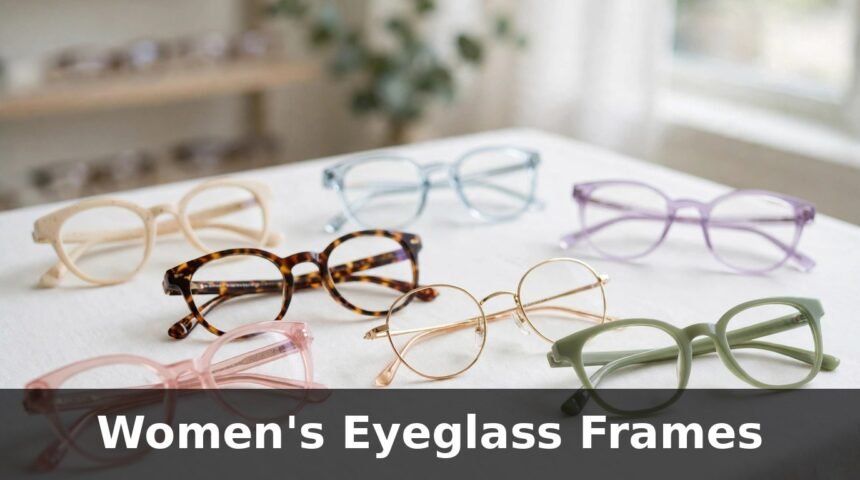
Choosing women’s eyeglass frames sounds like it should be simple — you pick a pair you like, and you are done. In practice, most of us have stood in front of a wall of frames feeling overwhelmed, tried on a dozen pairs, and still walked out unsure. The right frames have to do several jobs at once: hold your prescription lenses comfortably, suit the shape of your face, survive daily life, and feel like you. Get the balance right and glasses become a favourite accessory. Get it wrong and they slide down your nose, pinch behind your ears, or sit unworn in a drawer.
This guide covers everything that matters when you choose women’s eyeglass frames: how face shape really works (and where the usual advice goes too far), frame materials, sizing numbers, lens considerations, and how to try frames on properly — in store and online. By the end, you will know exactly what to look for and what to ignore.
What Matters Most When Choosing Women’s Eyeglass Frames
Before diving into face shapes and materials, it helps to know what the decision really comes down to. A good pair of frames has to pass four tests:
- Comfort. You will wear these for hours every day. They should feel light, sit evenly, and never pinch or slide.
- Fit. The frames must match the width of your face, the position of your eyes, and the shape of your nose bridge.
- Function. The frames must suit your prescription — strong prescriptions need different frames than mild ones — and your lifestyle.
- Style. They should look like you, not like a rulebook. The best frames are the ones you actually enjoy wearing.
Keep those four tests in mind as you read on. Every tip in this guide serves one of them, and when two pieces of advice seem to conflict, comfort and fit should win over fashion every time.
Face Shape: Useful Guide, Not a Rulebook
You have probably seen the classic advice: round faces need angular frames, square faces need round frames, and so on. There is a grain of truth in it — contrast can be flattering — but it is often overstated. In real life, face shape is one factor among many, and your colouring, features, and personal taste matter just as much.
Here is a balanced way to think about it.
Round Faces
If your face is roughly as wide as it is long, with soft curves and a rounded jaw, angular or rectangular frames can add definition. Wayfarer-style and rectangular frames are popular choices. That said, round frames can also look lovely on round faces if the proportions are right — the old “never wear round on round” rule is more rigid than it needs to be.
Square Faces
A square face has a strong jawline and a broad forehead. Round or oval frames soften the angles and are a classic recommendation. Thin metal frames can also work well because they add less visual weight. But a well-chosen rectangular frame can look striking and confident on a square face too.
Oval Faces
Oval faces — longer than they are wide, with a gently curved jaw — suit the widest range of frames. Most shapes work, so you can choose based on size and style rather than shape rules. The main thing to watch is proportion: frames that are far wider or narrower than your face will still look off.
Heart-Shaped Faces
A heart-shaped face is wider at the forehead and narrower at the chin. Frames that are wider at the bottom, or lighter and more delicate at the top, can balance the face. Round frames and rimless styles are often recommended, but again, personal preference matters more than the rule.
The honest takeaway: use face-shape advice as a starting point for trying things on, not as a filter that eliminates most of the shop. Try the shapes you like, look in the mirror, and trust what you see. You are the one who has to love them every morning.
Frame Sizes: The Numbers on the Inside of the Arm
Every pair of glasses has three numbers printed on the inside of one temple arm — something like 52-18-140. These are measurements in millimetres, and they tell you more about fit than any style name will.
- Lens width (52 in the example). The width of one lens. Wider lenses suit wider faces and stronger prescriptions need enough lens width to fit the lens properly.
- Bridge width (18). The distance between the two lenses, which sits across your nose. Too narrow and the frames pinch; too wide and they slide down.
- Temple length (140). The length of the arms that go over your ears. This affects how the frames sit and whether they stay put.
If you already own a pair of glasses that fit well, check those numbers and use them as your reference when shopping. Buying frames with similar measurements is the single most reliable shortcut to a good fit — especially when you shop online and cannot try the frames on first.
A few more fit checks that matter:
- Overall width. The frames should be roughly the same width as your face. Frames much wider than your face look oversized; much narrower ones can pinch at the temples.
- Eye position. Your eyes should sit roughly in the centre of each lens, both horizontally and vertically. Eyes too high or too low in the lens usually mean the frame is the wrong size or shape for you.
- Eyebrows. The top of the frames should sit near, but not cover, your eyebrows. Frames that hide your brows entirely tend to look heavy; frames that sit far below them can look small.
Frame Materials: What Each One Feels Like
The material decides how heavy the frames feel, how flexible they are, how long they last, and how much they cost. Here are the main options you will come across.
Acetate
Acetate is a plant-based plastic that is the most common material for fashionable frames. It comes in a huge range of colours and patterns, including tortoiseshell, and it can be made into bold, thick shapes that metal cannot. Acetate frames are light, comfortable, and hypoallergenic for most people. Their downside is that they are less adjustable than metal — an optician can tweak them, but not as freely — and they can become brittle over many years.
Metal
Metal frames — usually stainless steel, aluminium, or a nickel alloy — are thin, light, and elegant. They are easy for an optician to adjust, which makes them a good choice if you need a precise fit. They suit minimalist and rimless styles particularly well. The trade-off is that some people are sensitive to nickel, so check the material if you have had skin reactions to jewellery before.
Titanium
Titanium is the premium option: extremely light, very strong, flexible, and hypoallergenic. Titanium frames are a great choice if you have a strong prescription (because the lenses are heavier, so a light frame helps), if you wear your glasses all day, or if you have sensitive skin. They cost more than acetate or standard metal, but they tend to last a long time.
TR-90 and Other Flexible Plastics
TR-90 is a flexible, lightweight thermoplastic that is popular in sports and children’s frames, and increasingly in everyday women’s frames. It bends rather than breaking, which makes it a good option if you are rough on your glasses or want something very light. It usually comes in simpler styles and solid colours rather than the rich patterns you get with acetate.
Wood and Mixed Materials
Wooden frames and mixed-material frames (metal with acetate, for example) are niche choices, chosen mostly for style. They look distinctive, but they can be harder to adjust and repair, and they are not the most practical choice for a first or only pair.
Women’s Eyeglass Frames Compared
A quick comparison of the most common materials makes the trade-offs easy to see.
| Material | Weight | Durability | Adjustability | Style range | Best for |
|---|---|---|---|---|---|
| Acetate | Light | Good | Moderate | Very wide — colours, patterns, bold shapes | Fashion-first buyers, bold looks |
| Metal | Very light | Good | Excellent | Slim, minimalist, classic | Precise fit, understated style |
| Titanium | Feather-light | Excellent | Good | Premium, mostly slim styles | Strong prescriptions, all-day wear, sensitive skin |
| TR-90 | Very light | Excellent — very flexible | Moderate | Sporty, simple, solid colours | Active lifestyles, durability |
| Rimless | Lightest feel | More delicate | Good | Nearly invisible | People who want glasses to disappear |
There is no single best material — the right one depends on your prescription, your habits, and your taste. A good approach is to choose your frame shape first, then pick the material that gives you the weight and durability you need in that shape.
Your Prescription Changes the Choice
Your prescription is not a footnote to frame shopping — it shapes which frames will actually work.
- Mild prescriptions work with almost any frame, including large and rimless styles. You have the most freedom here.
- Strong prescriptions need smaller, rounder lens shapes where possible, because large lenses get thick and heavy at the edges. Smaller frames also keep high-index lenses looking neat, and a sturdy material like titanium or acetate holds the extra weight better than a flimsy frame.
- Progressive lenses need frames with enough vertical depth — usually a lens height that gives room for the distance, intermediate, and reading zones. Very narrow or shallow frames are often unsuitable for progressives, so check this with your optician before falling in love with a slim design.
- Prism or special lenses may also need a sturdier frame and a shape that fits the lens properly. Again, your optician can confirm what works.
The most expensive mistake in frame shopping is buying frames online and discovering afterwards that your lenses do not fit them properly. If your prescription is strong or unusual, it is worth confirming the frames will work with your lenses before you buy — most good retailers will check this for you if you ask.
Colour and Style: Finding Frames That Feel Like You
Colour is personal, but a few guidelines help narrow the field.
- Warm skin tones (golden, peachy, or yellow undertones) often suit tortoiseshell, warm browns, gold, copper, and warm reds.
- Cool skin tones (pink, rosy, or blue undertones) often suit black, silver, grey, blue, and cool jewel tones.
- Neutral skin tones can usually wear either side comfortably.
- Hair colour matters too. Dark frames stand out against light hair; lighter frames can get lost against dark hair unless they have enough presence. But contrast is not a rule — some of the most striking looks come from matching frames to hair colour for a tonal effect.
Style-wise, women’s eyeglass frames in 2026 span a wide range: oversized square frames, round retro frames, cat-eye shapes, clear acetate, thin gold metal, and bold coloured frames are all easy to find. Trends are worth knowing about, but they should not decide the purchase. A classic shape you love will still look good in five years; a trend-driven shape you are unsure about may not survive the season. If you want to try a trend, consider it for a second pair rather than your only pair.
How to Try Frames On Properly
Whether you shop in a store or online, the try-on is where the decision is really made. Here is how to do it well.
In Store
- Wear your usual makeup and hairstyle. Frames look different with your hair up versus down, and with or without makeup — try them as you will actually wear them.
- Move around. Look down, shake your head gently, and walk a few steps. Frames that slide or wobble now will only get worse.
- Check the pressure points. Behind the ears and on the sides of the nose are where discomfort shows up. A little pressure that fades in a minute is normal; pain is not.
- Look at yourself from a normal distance. Hold the mirror at arm’s length, not six inches from your face. That is how other people see you.
- Take a photo. A quick photo shows you the frames the way others see them, and it helps you compare several pairs later without relying on memory.
- Ask for adjustments. A good optician can adjust the arms and nose pads so a near-perfect pair fits perfectly. Do not reject frames for a small fit issue that an adjustment can fix.
Online
- Use the retailer’s virtual try-on if it offers one. It is not perfect, but it gives a reasonable sense of scale and shape.
- Match the measurements. Compare the lens width, bridge, and temple numbers with a pair you already own that fits well.
- Check the return policy before you buy. Free returns or a home try-on programme make online shopping low-risk; a strict no-returns policy on frames is a reason to think twice.
- Order a few options. If home try-on is available, use it — comparing three pairs at home over a day or two beats guessing from photos.
Common Mistakes to Avoid
- Choosing frames by face-shape rules alone. Shape is a starting point, not a verdict. Try on the frames you like.
- Ignoring the measurements. Style is visible; fit is measurable. Both matter.
- Buying frames that are too big. Oversized frames look fashionable in photos but feel heavy, slide down, and make lenses thicker and pricier.
- Forgetting your prescription. A beautiful frame that cannot hold your lenses properly is not a bargain at any price.
- Skipping the adjustment. Many people wear slightly crooked or loose frames for years because nobody adjusted them. A free adjustment at the optician takes minutes.
- Choosing your only pair purely on trend. Save trends for a second pair; make your main pair something you will still love next year.
Care Tips to Keep Frames Looking New
- Clean lenses with a microfibre cloth and lens spray or lukewarm water. Avoid tissues, shirt hems, and paper towels, which can scratch coatings over time.
- Hold frames by the bridge, not by one arm. Holding by one arm twists the frame slightly each time and eventually bends it out of shape.
- Store them in a hard case. Most scratches and bent frames happen when glasses are loose in a bag or left face-down on a table.
- Keep them away from heat. Do not leave glasses on a car dashboard in summer — heat can warp acetate and damage lens coatings.
- Get them adjusted occasionally. A quick check at the optician every six months or so keeps the fit right as screws loosen and arms shift.
- Tighten loose screws promptly. A tiny screwdriver kit costs very little and stops a wobbling arm from becoming a broken one.
Frequently Asked Questions
How do I know which frame size I need?
Check the three numbers printed inside the arm of a pair that fits you well — lens width, bridge width, and temple length. Look for frames with similar numbers. You can also ask an optician to measure your face and recommend a size range. As a rough guide, the frames should be about as wide as your face, with your eyes roughly centred in each lens.
Are round frames good for women’s faces?
Yes, round frames suit many women. They soften strong features and give a classic, intellectual look. They work particularly well on square and oval faces, but they can flatter round faces too if the size is right. Try them on and see — shape rules are a guide, not a law.
What is the best frame material for everyday wear?
There is no single best material, but acetate is the most popular for everyday fashion frames because of its colour range and comfort, while titanium is the best choice if you want the lightest possible frame or you have a strong prescription. Metal is a good middle ground — light, adjustable, and elegant. Choose based on weight, durability, and how the frames feel on your face.
Can I wear any frames with a strong prescription?
Not quite any frame. Strong prescriptions work best in smaller frames with a rounded shape, because large lenses get thick and heavy at the edges. High-index lenses help reduce thickness. Check with your optician before buying oversized frames if your prescription is strong, so you do not end up with lenses that look or feel wrong.
How often should I replace my eyeglass frames?
There is no fixed schedule. Replace frames when they are damaged, when the fit can no longer be adjusted properly, or when your prescription changes and your optician recommends new frames. Many people keep frames for two to three years, but well-made titanium or acetate frames can last much longer with care. If the frames still fit well and look good, there is no need to replace them just because time has passed.
Are rimless frames a good choice for women?
Rimless frames are a good choice if you want a minimal, barely-there look and you have a mild to moderate prescription. They are light and elegant, and they do not hide your face. They are more delicate than full-rim frames, though, and they can be more expensive to repair — so they suit people who handle their glasses gently.
Should I buy eyeglass frames online?
Buying online can work well, especially if you know your measurements and your prescription is straightforward. Use virtual try-on tools, compare the frame measurements with a pair that fits you, and check the return policy first. If your prescription is strong, you need progressives, or you have never worn glasses before, an in-store visit is usually worth it for the fitting help.
Conclusion
The best women’s eyeglass frames are not the most expensive ones, the most fashionable ones, or the ones a face-shape chart recommends. They are the ones that fit your face, suit your prescription, feel comfortable after eight hours, and make you feel like yourself when you look in the mirror.
Start with your measurements and your prescription, narrow the field by material and shape, and then try on more pairs than you think you need — in store, at home, or both. Take photos, walk around, and pay attention to how each pair feels after a few minutes, not just how it looks in the first ten seconds. When you find the pair that passes all four tests — comfort, fit, function, and style — you will know. That is the pair to buy.
Read Also: Adidas Women’s Seamless Hi-Leg Panties (2026 Guide)