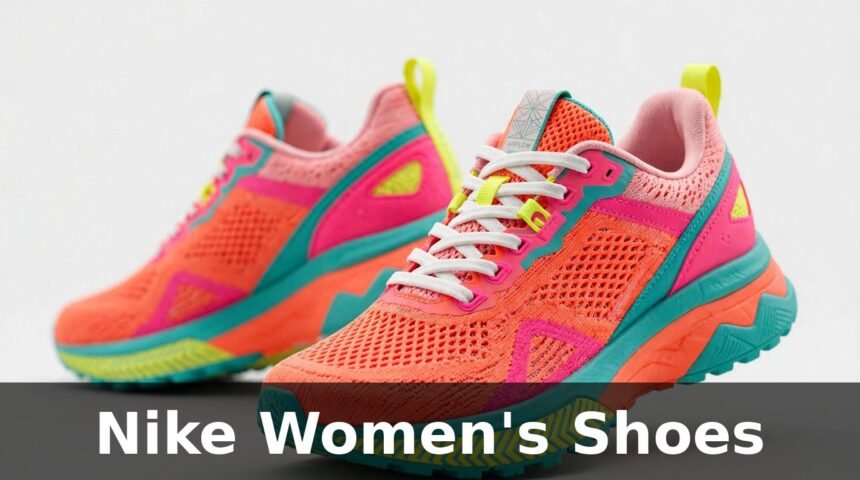
Nike women’s shoes cover a lot of ground, and that is exactly why choosing a pair can feel harder than it should. The same brand sells a road running shoe, a lifting shoe, a walking shoe, and a fashion sneaker that looks like it belongs on a city street rather than a track, and each one is built for a different kind of movement. Pick the wrong category and even a well-made shoe will feel wrong: too soft for the gym, too flat for a long run, too narrow for a wide foot, or too stiff for all-day walking.
The good news is that the choice gets simple once you work in the right order. Start with what you will actually do in the shoes, then match your foot shape and arch to the right level of support, then think about cushioning and fit, and only then worry about color and style. This article follows that order. It explains the most popular styles, how Nike women’s sizing and fit actually work, how to choose by activity, and how to look after the pair you buy, so you can spend your money once and get it right.
More Information: What Is a Supermoon? Meaning, Causes and When to See One
What Makes Nike Women’s Shoes Different?
Nike women’s shoes are not simply smaller versions of the men’s shoes. They are built on a women’s last, which is the foot-shaped mold used to construct the shoe, and that mold reflects average differences in female foot proportions. Women’s models typically have a narrower heel, a slightly wider forefoot relative to the heel, and a shape that suits a lower-volume foot. The sizing is calibrated to women’s US sizes, and the colorways often differ too, though the core technologies underneath are usually shared with the equivalent men’s models.
That design difference matters most in fit. A shoe built on the wrong last can feel loose at the heel while pinching at the toes, or snug in the wrong place even when the length is right. If you have ever worn a unisex shoe that slipped at the back while squeezing at the front, you have felt the problem that a women’s last is meant to solve. It does not guarantee a perfect fit for every foot, because feet vary widely within any group, but it gives most women a better starting point than a scaled-down men’s shoe.
The range itself is broad. Nike groups its women’s footwear into running, training and gym, walking, court sports, and lifestyle or casual styles, and many models sit on the border between two groups. A Pegasus is a running shoe first, but plenty of people wear it for walking. An Air Force 1 is a lifestyle shoe now, but it started life as a basketball shoe. Knowing the category a shoe was designed for is more useful than knowing its name, because the category tells you what the shoe is supposed to do.
The Most Popular Nike Women’s Shoe Styles
A few models come up again and again when women talk about Nike shoes, because they have stayed in the lineup for years and earned a reputation for doing one job well. The list below covers the styles you are most likely to meet in a store or in a search, grouped by what they are made for. Model names and versions change over time, so treat the names as a guide to the type of shoe rather than a promise that a specific version number is still current.
Nike Air Zoom Pegasus
The Pegasus is Nike’s long-running everyday road running shoe, and it is the default recommendation for a reason. It balances cushioning and responsiveness without going to extremes in either direction, using a combination of Zoom Air units and foam in the midsole to give a lively feel underfoot while staying stable enough for daily miles. It suits neutral runners who want one pair for regular runs, tempo days, and long slow runs, and it also works well for walking and for standing all day, which is why it shows up far beyond running circles.
If you run three or four times a week and you want a single shoe that handles most of your running, the Pegasus is usually the first model worth trying. It is not a racing shoe, and it is not a maximum-cushion shoe, so runners who want the softest possible landing or the lightest possible race-day shoe may prefer a different model. For everyone else, it is a sensible, durable starting point.
Nike Air Force 1
The Air Force 1 started as a basketball shoe and became one of the most worn lifestyle sneakers in the world. The women’s version keeps the same clean leather upper, chunky sole, and low profile that made the original famous, and it pairs with almost anything, from jeans to dresses to athleisure. It is a flat, firm shoe with a cupsole, so it feels stable and grounded rather than soft and bouncy, and it is better suited to casual wear and light walking than to running or serious training.
Buy the Air Force 1 for style and everyday wear, not for performance. It is comfortable for a day of errands and standing, but its weight and flat sole make it a poor choice for a long run or a high-impact workout. If you want one pair that looks good with everything and can handle a normal day, it is hard to beat.
Nike Air Max
Air Max is a family rather than a single shoe, and its defining feature is the visible air unit in the sole. Different Air Max models use different amounts of air cushioning and different upper designs, so the feel varies from model to model. The Air Max 90 and Air Max 270 are popular lifestyle choices, while other Air Max models lean further toward running or walking. The common thread is a cushioned, slightly springy feel and a look that stands out.
Air Max shoes suit people who want visible cushioning and a bold look, and who will mostly walk or stand in them. They are generally heavier than a dedicated running shoe, so a serious runner will usually prefer a Pegasus or a similar road shoe. For daily wear, though, the cushioning is comfortable, and the range of colors makes it easy to find a pair that fits your wardrobe.
Nike Blazer and Nike Cortez
The Blazer Mid ’77 and the Cortez are heritage styles that come from Nike’s early years, and both have found a second life as casual sneakers. The Blazer is a high-top with a retro basketball look, while the Cortez is a low, slim running-inspired shoe with a clean, simple upper. Both are flat, light, and easy to wear, and both work best as everyday shoes rather than as performance footwear.
These are the shoes to reach for when you want a simple, understated sneaker that goes with jeans, skirts, and casual outfits. They are not cushioned enough for long runs, and they do not offer the support of a training shoe, so treat them as lifestyle shoes and choose a different model for sport.
Nike Metcon
The Metcon is Nike’s cross-training and gym shoe, built for lifting, high-intensity interval training, and workouts that mix strength and cardio. It has a firm, flat, low-to-the-ground feel, a wide and stable heel, and a durable upper that can handle rope climbs and lateral movement. That firmness is deliberate: a soft, squishy running shoe makes it harder to feel the floor and stay stable under a heavy lift, while a Metcon keeps your foot planted.
If your main activity is the gym, and especially if you lift weights or do functional training, the Metcon is a better choice than a running shoe. It is not a comfortable long-distance running shoe, though, and it can feel stiff and unforgiving if you wear it for a long walk. Use it for the workout it was designed for, and keep a different pair for running.
Nike Invincible Run and Nike Vomero
The Invincible Run and the Vomero sit at the softer, more cushioned end of the running range. They use thick foam midsoles to give a plush, protective landing, which suits runners who want maximum comfort on long runs, runners coming back from a break, and walkers who want a soft shoe for long days on their feet. The trade-off is weight and a slightly less responsive feel than a firmer shoe like the Pegasus, and the soft foam can feel less stable for people who need more support.
Choose one of these if cushioning is your top priority and you are willing to accept a heavier, softer shoe in return. They are a good option for easy runs, recovery runs, and long walks, and a poor option for speed work or for gym sessions that need a firm base.
Nike Court Vision and Court Legacy
Court Vision and Court Legacy are affordable, everyday court-inspired sneakers with a clean, simple design. They borrow the look of classic Nike basketball and tennis shoes, with a flat sole, a leather or synthetic upper, and a low profile. They are comfortable for casual wear and light walking, and they cost less than many of the performance models, which makes them a popular first pair.
Treat these as lifestyle shoes. They are not built for running or for serious court sports, and they do not offer the cushioning or support of a dedicated performance shoe. For school, work, errands, and casual outings, they do the job well and look good doing it.
Nike Revolution and Nike Tanjun
The Revolution and the Tanjun are entry-level running and walking shoes that focus on comfort and value. They use simple foam cushioning, a breathable mesh upper, and a lightweight build, and they are often among the least expensive Nike women’s shoes in a store. They suit new runners, walkers, and anyone who wants a comfortable everyday sneaker without paying for advanced cushioning technology.
These models are a good place to start if you are unsure how much running you will actually do, or if you want a second pair for walking and errands. They are not as durable or as responsive as the Pegasus, and serious runners will outgrow them, but for light use they offer solid value.
Nike Women’s Shoes by Activity
Choosing by activity is the fastest way to narrow the range. The table below is a simple starting point, not a rule, and your foot shape and personal preference still matter, but it shows where each type of shoe earns its keep.
Running on roads, several times a week, calls for a road running shoe such as the Pegasus, the Invincible Run, or the Vomero. Racing or speed work calls for a lighter, more responsive shoe, while trail running calls for a trail-specific model with a grippier outsole and a rock plate. Walking every day calls for a comfortable, well-cushioned shoe with a flexible sole and good breathability, which can be a walking shoe or a soft running shoe. Gym work and lifting call for a firm, stable training shoe such as the Metcon, with a flat sole and a wide heel. Court sports call for a court shoe with lateral support and a grippy outsole. Everyday casual wear calls for a lifestyle shoe such as the Air Force 1, the Blazer, the Cortez, or the Court Vision, chosen for comfort and style rather than performance.
The mistake to avoid is buying a shoe for one activity and using it for another. A soft running shoe in the gym can feel wobbly under a heavy lift. A firm gym shoe on a long run can feel harsh and unforgiving. A flat lifestyle shoe on a long walk can leave your feet tired by the afternoon. If you do more than one activity regularly, it is usually better to own two pairs that each do one job well than to own one pair that does two jobs poorly.
How Nike Women’s Sizing Works
Nike uses standard US women’s sizing, but fit varies by model, and that variation catches a lot of buyers out. Some models run narrow, some run true to size, and some run roomy, so the size that fits you in one model may not fit you in another. Reviews for a specific model often mention whether it runs small, large, or narrow, and those notes are worth reading before you order online.
As a general guide, Nike women’s shoes tend to run slightly narrow, especially in performance models built for speed. If you have wide feet, or if you are between sizes, going up half a size or looking for a wide version where one is available is often the safer choice. Wide versions exist for some models but not all, so check the product page for a width option before you assume it is there.
Measure both feet before you buy, because most people have one foot slightly larger than the other, and you should fit the larger one. Measure late in the day, when your feet are at their largest, and wear the socks you plan to wear with the shoes. Stand on a piece of paper, trace around each foot, and measure the length from heel to longest toe, then compare the result with Nike’s official size chart. A Brannock device at a store does the same job more accurately, and a gait analysis at a specialty running store can also tell you about your arch and how your foot moves when you run.
How Nike Women’s Shoes Should Fit
A good fit has a few clear signs, and you can check them in a minute. There should be about a thumb’s width of space between your longest toe and the front of the shoe, so your toes have room to spread and move forward when you walk or run. The heel should feel snug and locked in, with no slipping when you walk, because heel slip causes blisters and wastes energy. The midfoot should feel secure without pinching, and the shoe should bend at roughly the same place your foot bends, near the ball of the foot.
Try shoes on later in the day, when your feet are slightly swollen, and walk or jog in them on a surface similar to the one you will use them on. A carpeted store floor tells you less than a hard floor or a short run outside, so take a few minutes to move in them properly. If a shoe pinches, rubs, or slips in the store, it will not magically improve with wear. A good shoe should feel comfortable from the first try, with only a short break-in period for the upper to soften.
Pay attention to width as well as length. A shoe that is the right length but too narrow will squeeze the forefoot and can cause numbness or hot spots on a long walk or run. A shoe that is too wide will let the foot slide around inside, which can cause blisters and a sloppy feel. If the standard width does not work, try a wide version, try a different model with a roomier toe box, or try a half size up and see whether the extra length gives your forefoot the room it needs without making the heel slip.
Arch Type, Pronation and Support
Your arch type and the way your foot rolls when you move affect which shoe will feel best. People with flat feet or low arches often overpronate, which means the foot rolls inward more than usual when it lands. People with high arches often underpronate, or supinate, which means the foot rolls outward and does not absorb shock as well. People with a neutral arch usually land with a fairly even roll and can wear a neutral shoe without extra support.
You can get a rough idea of your arch type with a simple wet test. Wet the sole of your foot, step onto a piece of paper or a dry surface, and look at the footprint. A flat foot leaves a full print with little curve on the inside edge. A high arch leaves a narrow band connecting heel and forefoot, with a deep curve missing from the middle. A neutral arch leaves a print with a moderate curve. The test is not a diagnosis, but it gives you a useful starting point.
For overpronation, look for a stability shoe with some medial support, such as a model in the Structure range, or consider an insole if your chosen shoe does not offer enough support. For underpronation, look for a well-cushioned neutral shoe that absorbs shock, since your foot does less of that work on its own. For a neutral gait, a neutral shoe such as the Pegasus is usually the right choice. If you are unsure, or if you have pain when you run or walk, a gait analysis at a specialty store or a conversation with a podiatrist is worth more than any general guide.
Cushioning Technologies Explained
Nike uses several cushioning technologies, and the names can make the choice seem more complicated than it is. The main ones to know are React foam, Zoom Air, and Air Max units, along with the newer ZoomX foam used in racing shoes. React foam is soft, durable, and slightly springy, and it suits everyday running and training. Zoom Air uses pressurized air units in the forefoot or heel to give a responsive, bouncy feel, and it shows up in the Pegasus and in other running models. Air Max units are larger visible air pockets that give a cushioned, slightly springy feel and a bold look, and they suit lifestyle and walking shoes.
ZoomX is a lighter, more energetic foam used in racing shoes such as the Vaporfly, and it is designed for speed rather than durability or everyday comfort. It is an excellent choice for a race, and a poor choice for a daily trainer that needs to last for hundreds of miles. Flyknit and engineered mesh uppers are the other technology worth knowing: they are lightweight, breathable, and flexible, which helps in warm weather and on long runs, though they offer less structure than a leather upper.
The practical point is simple. Softer is not always better. A very soft shoe can feel unstable if you need support, and a very firm shoe can feel harsh if you need cushioning. Think about what your feet need for your activity, try the shoe, and trust how it feels on your foot rather than the name of the foam inside it.
How to Choose Nike Women’s Shoes Step by Step
A short, practical process beats a long list of options. Work through the steps below in order, and you will end up with a short list instead of a wall of choices.
First, name your primary activity honestly. Running five times a week is a different need from walking the dog, lifting three times a week, or wearing sneakers to work. Pick the activity you will do most, and choose the category that matches it. If two activities matter equally, plan for two pairs rather than forcing one shoe to do both jobs.
Second, measure your feet and know your size in the model you are considering. Measure late in the day, check the size chart, and read reviews for that model to see whether it runs narrow, small, or true to size. If you are between sizes, try the larger size first, especially for running, because feet swell during exercise.
Third, think about your arch and how your foot moves. Use the wet test as a starting point, and consider a stability shoe if you overpronate, a cushioned neutral shoe if you underpronate, and a neutral shoe if your gait is even. If you have ongoing pain, get a professional opinion before you buy.
Fourth, decide how much cushioning you want. A soft, plush shoe suits long, easy runs and long days on your feet. A firmer, more responsive shoe suits tempo runs, speed work, and gym sessions. A balanced shoe such as the Pegasus suits most people most of the time, which is why it is such a common recommendation.
Fifth, consider the upper, the weight, and the outsole. A breathable mesh upper suits hot weather and sweaty workouts. A leather upper suits casual wear and lasts well, but it is heavier and less breathable. A lighter shoe, under about nine ounces, suits running and speed. A heavier shoe, over about eleven ounces, often trades weight for support and durability. A road outsole suits pavement, while a trail outsole with deeper lugs suits dirt and loose surfaces.
Sixth, try the shoe on properly. Wear the right socks, try them late in the day, walk and jog in them, and check the thumb’s width at the toe, the heel lockdown, and the bend point. If you are buying online, order from a retailer with a clear return policy, and test the shoes indoors first so you can return them if the fit is wrong.
Common Mistakes When Buying Nike Women’s Shoes
A few mistakes come up so often that they are worth naming directly. The first is choosing by looks alone. A beautiful shoe that does not fit your activity or your foot shape will sit in the cupboard, while a plain shoe that fits well will get worn every day. Style matters, but it should come after fit and function, not before them.
The second is buying the same size in every model. Nike’s fit varies between models, so a size 8 in a Pegasus may not feel like a size 8 in an Air Force 1 or a Metcon. Check the fit notes for each model, and try the shoe on rather than assuming your usual size will work.
The third is buying a running shoe for the gym, or a gym shoe for running. The two categories are built for opposite jobs, and using one for the other can feel uncomfortable and can even increase the risk of a slip or a sore foot. Match the shoe to the activity, and keep a separate pair if you do both.
The fourth is ignoring width. Many women buy a longer shoe to fix a width problem, and end up with a shoe that is too long and slips at the heel. If the shoe pinches across the forefoot, try a wide version or a roomier model before you go up a size.
The fifth is wearing the shoes until they are completely worn out. Running shoes lose their cushioning gradually, long before the upper looks damaged, and a shoe that has lost its support can leave your feet and knees aching. Replace running shoes when the cushioning feels flat, the outsole is worn smooth in places, or your feet start aching in a way they did not before.
How to Care for Nike Women’s Shoes
Good care extends the life of a pair noticeably, and it does not take much effort. Start by rotating your shoes if you can, especially for running. A second pair gives the foam time to recover between runs and spreads the wear across two shoes, which can make both last longer.
Clean them gently. Remove loose dirt with a soft brush, wipe the upper with a damp cloth and a little mild soap, and let them air dry at room temperature away from direct heat. Do not put them in a washing machine unless the care label for that specific model says you can, and do not dry them on a radiator or in a tumble dryer, because heat can warp the foam and damage adhesives. Stuff them loosely with paper while they dry to help them hold their shape.
Keep them for the activity they were made for. A running shoe used as an everyday shoe will wear out faster, and a lifestyle shoe used for running will break down in the wrong places.
More Information: Under Armour Men’s Unstoppable Fleece Joggers (2026 Guide)
Store them in a cool, dry place, out of direct sunlight, and replace the laces if they fray, since a worn lace can affect fit more than people expect.
When to Replace Your Nike Women’s Shoes
There is no single mileage number that fits every shoe and every runner, because weight, gait, surface, and model all affect wear. As a rough guide, many running shoes are built to last for several hundred miles of running, and the foam will usually feel flat before the upper falls apart. The signs to watch for are the same across models: the cushioning feels dead or uneven, the outsole tread is worn smooth in the places where you land, the heel counter feels soft or collapsed, or your feet, knees, or shins start aching in a way they did not when the shoes were new.
Lifestyle shoes last longer in calendar terms, because they are not absorbing the impact of running, but they still wear out. A creased or cracked midsole, a sole that has separated from the upper, or a shoe that no longer supports your foot evenly is a sign that it is time to replace the pair. If you are unsure, compare the old pair with a new pair of the same model in a store, and the difference in cushioning and structure will usually be obvious.
Frequently Asked Questions About Nike Women’s Shoes
Do Nike women’s shoes run true to size?
Many Nike women’s shoes run true to size, but fit varies by model. Some performance models run slightly narrow, and some lifestyle models run roomy. Check the fit notes for the specific model you are considering, read reviews from other buyers, and try the shoe on late in the day with the socks you plan to wear. If you are between sizes, try the larger size first, especially for running.
What is the difference between Nike women’s and men’s shoes?
Nike women’s shoes are built on a women’s last, which reflects average differences in foot shape, including a narrower heel and a different forefoot-to-heel ratio. Sizing is in women’s US sizes, and the colorways often differ. The core technologies, such as React foam and Zoom Air, are usually shared with the equivalent men’s models, so the main difference is fit and shape rather than technology.
Which Nike women’s shoes are best for running?
For most runners, the Air Zoom Pegasus is the best all-round choice, because it balances cushioning and responsiveness for daily training. Runners who want maximum cushioning may prefer the Invincible Run or the Vomero, while runners who want a light racing shoe may prefer a ZoomX model such as the Vaporfly. The best shoe depends on your gait, your arch, and how far and how often you run.
Which Nike women’s shoes are best for walking?
A comfortable, well-cushioned shoe with a flexible sole and a breathable upper suits walking best. A soft running shoe such as the Pegasus, the Invincible Run, or the Vomero works well for long walks, as do dedicated walking shoes with good arch support. Avoid flat, firm lifestyle shoes for very long walks, because they offer less cushioning and support.
Which Nike women’s shoes are best for the gym?
The Nike Metcon is the best choice for most gym work, especially lifting and high-intensity training, because it has a firm, flat, stable base that keeps your foot planted. A soft running shoe is a poor choice for lifting, because the cushioning can feel wobbly under a heavy weight. For cardio-only gym sessions, a training shoe or a running shoe may suit you better than a Metcon.
How do I know my Nike women’s shoe size?
Measure both feet late in the day, when they are at their largest, and fit the larger foot. Stand on paper, trace around each foot, measure from heel to longest toe, and compare the result with Nike’s official size chart. A Brannock device at a store gives a more accurate reading, and trying the shoe on with the socks you plan to wear is the final check.
Are Nike women’s shoes good for wide feet?
Some Nike women’s models come in wide versions, and some models have a roomier toe box than others. If you have wide feet, look for a model that offers a wide option, read reviews for fit notes, and consider going up half a size if no wide version is available. Trying the shoe on is especially important for wide feet, because width varies as much as length between models.
How long do Nike women’s shoes last?
It depends on the model and how you use them. Running shoes typically last for several hundred miles before the cushioning feels flat, while lifestyle shoes can last longer in normal daily wear. Replace a pair when the cushioning feels dead, the outsole is worn smooth, the heel support has collapsed, or your feet start aching in a way they did not when the shoes were new.
Conclusion
Nike women’s shoes work best when you choose them in the right order: activity first, then fit, then cushioning, and only then style. A Pegasus suits most runners most of the time. A Metcon suits the gym. An Air Force 1, a Blazer, or a Court Vision suits everyday wear. A soft, cushioned model such as the Invincible Run or the Vomero suits long runs and long days on your feet. The size that fits you in one model may not fit you in another, so measure your feet, check the fit notes for the model you want, and try the shoes on late in the day with the right socks.
Get those basics right and the rest is simple. The right pair should feel comfortable from the first wear, with a thumb’s width at the toe, a snug heel, and a bend that matches your foot. Look after the shoes you buy, replace them when the cushioning goes flat, and do not let a beautiful colorway talk you into a shoe built for a different job. Choose for what your feet will actually do, and your Nike women’s shoes will do it well.
Read Also: Julio’s Tortilla Chips: Flavors, Nutrition and Where to Buy